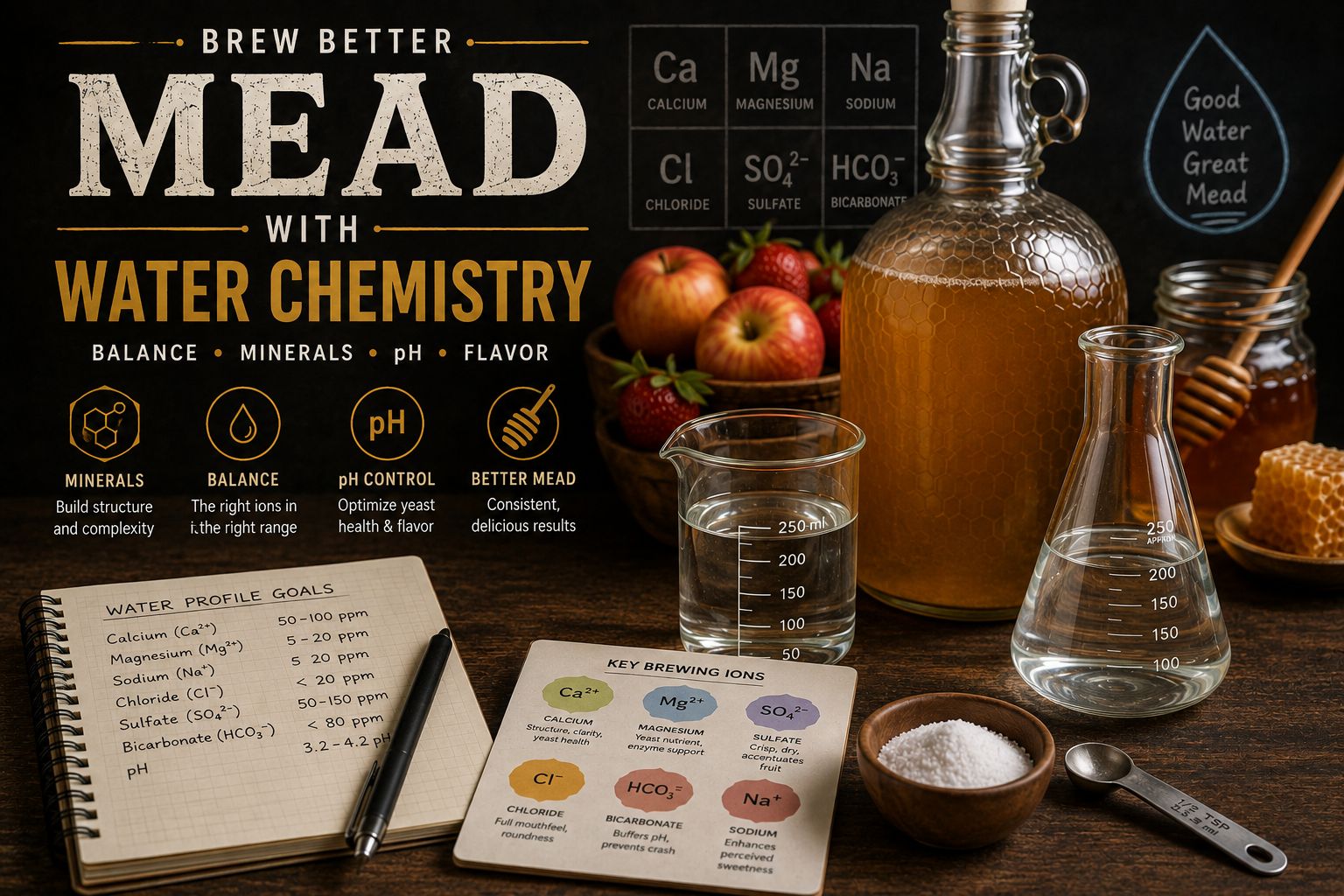
What Chloride Does
Chloride is the "fullness" ion. It adds body, rounds out harsh edges, and enhances the perception of sweetness. If your mead tastes thin, sharp, or overly dry, chloride is usually the answer.
Fullness and body. Chloride increases the viscosity perception of the mead — it feels thicker, more substantial on the tongue. This isn't actual viscosity; it's a sensory effect. But it's powerful. A mead with 100 ppm chloride feels noticeably fuller than one with 30 ppm, even at the same ABV and sweetness.
Sweetness enhancement. Chloride works alongside sodium to enhance perceived sweetness. Unlike sodium, chloride doesn't have a salty character at any concentration. It purely rounds and softens, making honey flavors taste richer and more integrated.
Harshness reduction. Chloride tempers the sharp, sulfury, or bitter notes that can come from high sulfate, excessive acidity, or rough alcohol character. It's the peacemaker ion — it smooths things over.
When to Use It
Use chloride when:
- Making sweet meads, dessert meads, or sack meads
- Making fruit meads (melomels) where you want rich, jammy character
- Your mead tastes thin, sharp, or excessively dry
- You want a soft, velvety mouthfeel
Reduce chloride when:
- Making dry traditional meads where crispness is the goal
- Your mead tastes cloying or heavy
- You want to accentuate fruit brightness or floral delicacy
Target Range
50–150 ppm for most mead styles.
| Mead Style | Target Cl⁻ | Character |
|---|---|---|
| Dry traditional | 50–75 ppm | Balanced, slight roundness |
| Semi-sweet traditional | 75–100 ppm | Full but not heavy |
| Sweet traditional | 100–150 ppm | Rich, velvety |
| Fruit mead (melomel) | 100–150 ppm | Jammy, full |
| Dessert/sack mead | 150 ppm | Lush, coating |
I target 100 ppm as my default for semi-sweet traditional meads. For fruit meads, I push to 120–150 ppm.
Ceiling: Above 200 ppm, chloride can taste flat, heavy, or "flabby." The mead loses vibrancy. Keep it under 150 ppm unless you're making a deliberately heavy dessert mead.
How to Add Chloride
Calcium Chloride (CaCl₂·2H₂O)
- Adds: Chloride + Calcium
- Best for: Most situations — you almost always need calcium too
- Effect: Fullness + yeast health + clarity
- Dosage: 1 gram per gallon adds ~127 ppm chloride and ~72 ppm calcium
Magnesium Chloride (MgCl₂·6H₂O)
- Adds: Chloride + Magnesium
- Best for: When calcium is already on target but you need more chloride
- Effect: Fullness + yeast nutrient boost
- Dosage: 1 gram per gallon adds ~92 ppm chloride and ~32 ppm magnesium
Note: Magnesium chloride is very concentrated. At the low doses needed for magnesium (0.2–0.4g/gallon), the chloride contribution is 18–37 ppm. Don't use it as your primary chloride source — use calcium chloride instead.
Non-Iodized Table Salt (NaCl)
- Adds: Chloride + Sodium
- Best for: When you want a small chloride bump plus sweetness enhancement
- Effect: Fullness + sweetness perception
- Dosage: 1 gram per gallon adds ~160 ppm chloride and ~104 ppm sodium
Use table salt sparingly — it adds a lot of sodium alongside chloride. Only use it when both are needed.
The Chloride-to-Sulfate Ratio
Chloride doesn't work in isolation — its effect is always relative to sulfate. The ratio between the two determines your mead's character (covered in detail in Part 1). When increasing chloride, consider decreasing sulfate to maintain your target ratio.
Common Mistakes
Overdosing. Above 200 ppm, chloride makes mead taste flat and lifeless. The flavors become muddy and indistinct. It's not offensive, just boring. If your mead tastes "blah" despite good ingredients, check your chloride levels.
Ignoring the ratio. 100 ppm chloride tastes different depending on whether sulfate is 50 ppm (2:1, full) or 200 ppm (1:2, dry). Always think in terms of the ratio, not the absolute chloride number.
Using calcium chloride as your only mineral. Calcium chloride is convenient because it hits two ions at once, but if it's your sole addition, you end up with high calcium and high chloride but zero sulfate and zero magnesium. A balanced profile needs all ions represented.
Not accounting for tap water chloride. Many municipal water sources have 30–80 ppm chloride naturally. Check your water report before adding more. Starting from distilled water eliminates this guesswork.
Confusing chloride with chlorine. Chloride (Cl⁻) is a mineral ion. Chlorine (Cl₂) is a disinfectant. They're chemically related but functionally opposite — chlorine causes off-flavors and kills yeast; chloride enhances flavor and is harmless. Your water report lists them separately. Don't confuse the two.
Comments