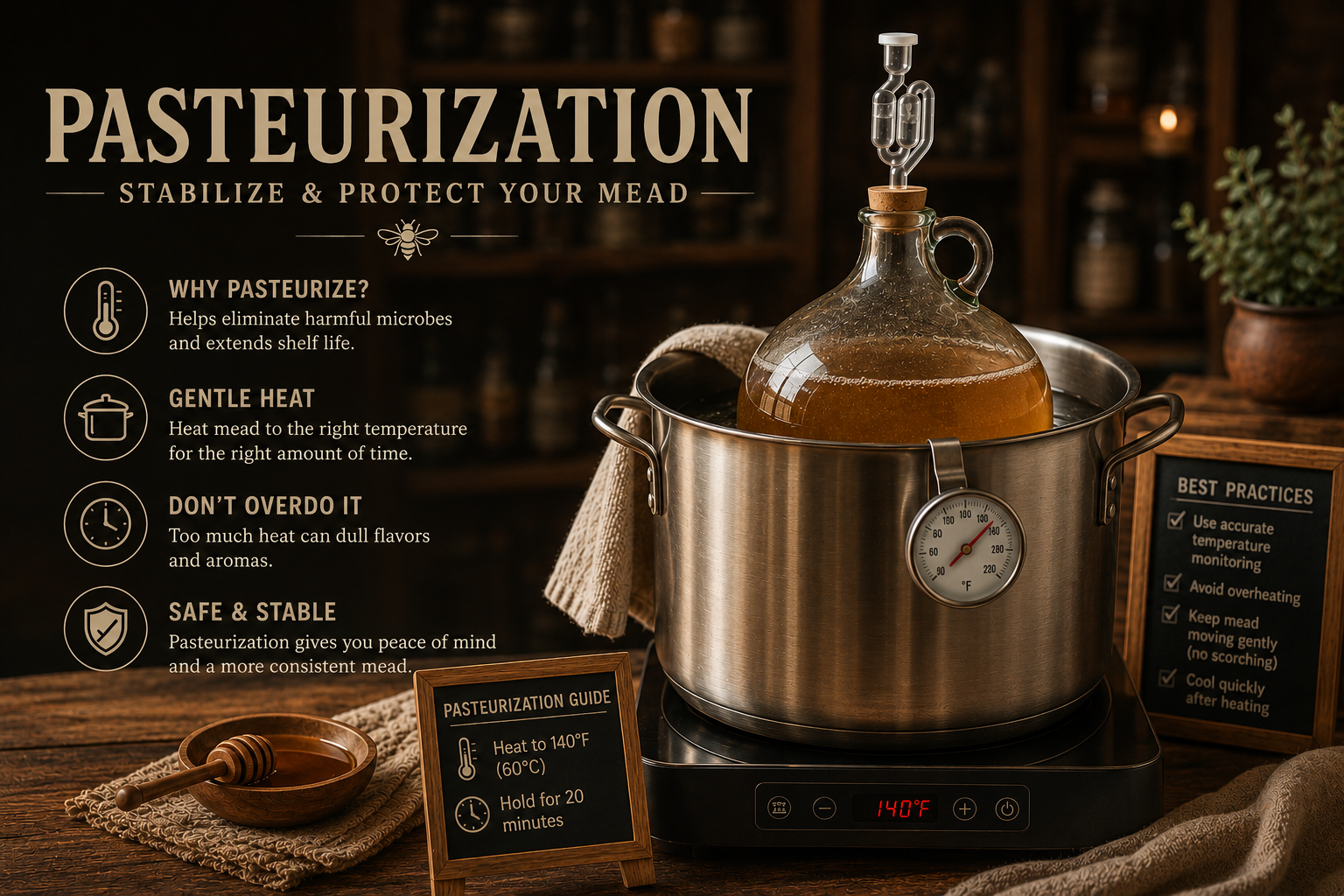
Pasteurization is one way to stop fermentation without adding potassium metabisulfite or potassium sorbate. The idea is simple: after you back sweeten or bottle condition, you gently heat the mead until the yeast are killed, then cool it quickly. Once the yeast are dead, the sweetness and carbonation level are locked in.
When Pasteurization Makes Sense
Pasteurization is useful when you want a sweet or sparkling mead but do not want to use chemical stabilizers. It also matters for carbonated mead because once priming sugar is in the bottle, fermentation will keep going until either the sugar runs out or the yeast stop. If you want a specific sweetness and a controlled level of carbonation, you need a way to halt the yeast at the right moment.
This step can happen before or after bottling. Some brewers pasteurize the entire batch in a fermenter, then bottle a stable mead. Others bottle first, let the mead carbonate to the desired level, then pasteurize the sealed bottles. Both approaches work.
Chemical Stabilization as an Alternative
If you do not want to use heat at all, the most common alternative is a combination of potassium metabisulfite and potassium sorbate. The metabisulfite knocks down the yeast population and helps protect the mead from oxidation, while the sorbate prevents any surviving yeast cells from reproducing. I wait about 24 to 48 hours after adding them, then back-sweeten to taste. Once the sweetness is stable, I bottle the still mead without worrying about refermentation.
I use chemical stabilization when I want precise control over the final sweetness and when I am bottling still mead in corked or swing-top bottles. Pasteurization and chemical stabilization do the same job in different ways; which one you choose depends on your equipment, your preference for sulfites, and whether the mead is still or carbonated.
My Preferred Heat Method
I prefer to pasteurize using heat, and I do it before bottling. I put my one-gallon fermenter directly into my brewing kettle, fill the kettle with water up to the level of the mead inside the fermenter, and heat the water slowly. This gives me an even, gentle heat around the fermenter rather than direct heat on the glass or plastic.
I raise the temperature of the mead to about 140°F and hold it there for roughly 20 minutes. A probe thermometer makes it easy to watch the internal temperature without opening the fermenter. After the hold, I lift the fermenter out and let it cool, or transfer the mead to a sanitized vessel once it is at a safe temperature.
Doing it this way means I do not have to handle dozens of individual bottles in a hot water bath, and I do not have to run multiple small batches through the kettle. It also avoids the risk of a bottle cracking or seal failing during heating because the pasteurization happens in a single sturdy fermenter.
Important Details
Use a fermenter that can handle warm water and moderate temperature swings. A glass carboy or stainless fermenter is ideal. Thin plastic may deform or leach flavors, so check the temperature rating of your vessel before trying this.
Heat the water slowly. Rushing the temperature can shock the fermenter or drive off aromatics from the mead. I aim for a few degrees per minute, not a rapid climb.
Watch the temperature closely. 140°F is a commonly cited target. Higher temperatures work, but you should shorten the hold time accordingly. Lower temperatures may not kill enough yeast unless you hold the mead there longer. Use a reliable thermometer and give the mead time to equalize throughout the vessel.
Note that you can also pasteurize at 160°F for about 1 minute, but I shy away from that. A shorter time at a higher temperature can still affect delicate flavors, and I prefer the gentler 140°F hold.
Cool the mead quickly once the hold is complete. I move the fermenter to a cool spot or set it in a bath of cool water. Fast cooling helps preserve aroma and reduces the chance of oxidation or continued heat exposure.
Pasteurizing Bottles
If you prefer to carbonate in the bottle and then pasteurize, the process is similar but the containers are smaller. You seal the bottles, let them carbonate at room temperature until they reach the pressure you want, then submerge them in a hot water bath. The water temperature should bring the liquid inside the bottle to around 140°F for the same short hold.
Use only bottles that can handle heat and pressure. Beer bottles, Champagne bottles, or heavy swing-tops are the safe choices. Thin wine bottles or decorative glass can crack or shatter. Always wear gloves and eye protection, and keep the bottles away from people and pets while they are hot.
Taste and Safety
Pasteurization, when done carefully, has very little impact on flavor. If you overshoot the temperature or hold too long, you can start to cook the mead or drive off delicate aromatics. Practice with water first if you are unsure of your setup, and take notes on temperature and timing so you can repeat it.
For my own batches, the kettle-and-fermenter method is the easiest and most consistent way to get a stable, sweet mead without sulfites or sorbates.
Comments